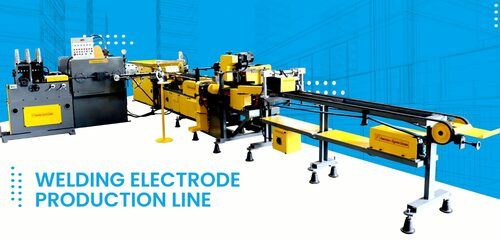
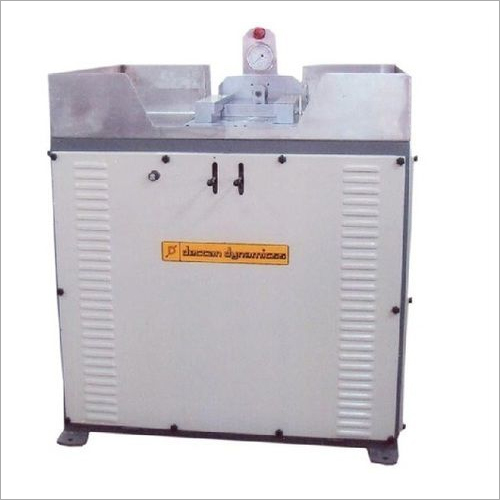
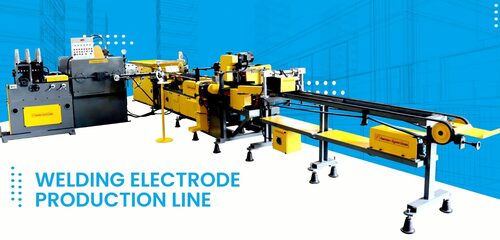
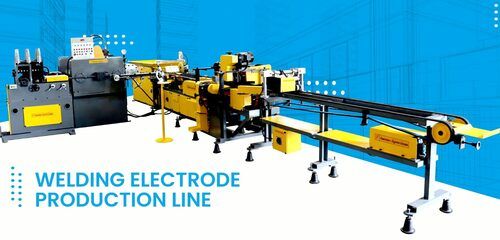
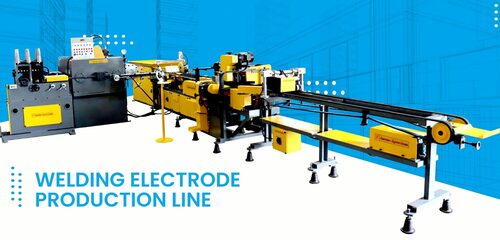
About welding electrode plant in Botswana
Specification
- Production Capacity 21000 kg per hour
- Automation Grade Semi-Automatic
- Phase 3 Phase
- Material MS ( Body )
- Power Source Electric
- Voltage 440V
- Surface Finishing Color Coated
- Country of Origin Made in India
- Motor Power 100 HP
Efficient Production and CustomizationDesigned for industrial efficiency, this welding electrode plant delivers a high output rate of 45-80 electrodes per minute with customizable production capacity to meet client-specific requirements. The plant accommodates both vertical and horizontal models and can be tailored for different electrode sizes and operation modes.
Advanced Automation and ControlUtilizing a PLC-based control panel, the plant offers precise operational management for greater consistency and reduced downtime. Automated and semi-automatic options allow you to choose the level of automation suited to your business needs, ensuring optimal deployment and user-friendly operation.
Comprehensive After-Sales SupportWe provide thorough installation and training services to ensure smooth startup and continued operation. Our team is committed to assisting with setup, maintenance guidance, and ongoing support, maximizing your plant's productivity and longevity.
Safety and Operational ReliabilitySafety is ensured with features such as emergency stop mechanisms, overload protection, and controlled noise levels (under 75 dB). The plant's robust mild steel or stainless steel construction, water-cooling system, and comprehensive safety protocols guarantee long-term reliable performance.
FAQ's of welding electrode plant in Botswana:
Q: How does the welding electrode plant operate, and what is the manufacturing process?
A: The plant operates on a continuous or batch basis, utilizing electric motor-driven systems and a PLC-based control panel for automation. The process starts by feeding mild steel (MS) wire, coating it with flux and potassium silicate, covering with Kraft paper, and then drying, cutting, and packaging the finished electrodes. Pneumatic automation can be included with a compressed air supply of 6-8 kg/cm2.
Q: What are the primary benefits of using this electrode plant for industrial applications?
A: This plant offers high operational efficiency, low maintenance, energy savings, and a user-friendly interface. Its customizable size and automation grade ensure flexibility, while built-in safety features, reliable power supply, and robust materials guarantee long-term benefits for manufacturers and exporters.
Q: When is after-sales support, such as installation and training, provided?
A: Installation and comprehensive training are provided immediately after delivery and setup of the plant. Our technical team ensures your staff are competent in operating, maintaining, and troubleshooting the plant for a seamless production start.
Q: Where can the welding electrode plant be installed, and what are the site requirements?
A: The plant is suitable for industrial environments in Botswana and worldwide. It requires access to a 380-415V, 50Hz, 3-phase AC power supply, adequate space (approximately 18m x 4m x 3.5m), proper ventilation, and a water supply for cooling. If pneumatic automation is chosen, a compressed air source (6-8 kg/cm2) is also necessary.
Q: How is the size range and production capacity of the electrodes determined?
A: Electrode diameter (2.5mm to 5.0mm) and length (300mm to 450mm) can be specified based on your requirements. Production capacity ranges from 3 to 8 tons per shift, customizable according to the desired level of output and automation.
Q: What raw materials are required for the operation of the plant?
A: The primary raw materials include mild steel (MS) wire, flux, Kraft paper, and potassium silicate. These materials are essential for core wire preparation, flux coating, and finishing the electrodes to meet industrial standards.
Q: What safety features are integrated into the welding electrode plant?
A: The plant includes emergency stop buttons, overload protection, controlled noise level below 75 dB, and safety mechanisms within the PLC control system, ensuring safe operation for personnel and equipment during production.
 Mon-Sat 9.00 AM - 6.00 PM
 Call Us:-07971645354








 Send Inquiry

 Send Inquiry
 Send Inquiry
 Send SMS
 Call Me Free


