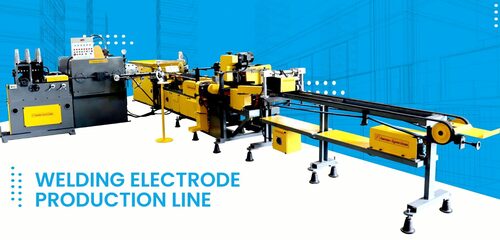
About welding electrode plant in Ohio
Specification
- Production Capacity 21000 kg per hour
- Automation Grade Semi-Automatic
- Phase 3 Phase
- Material MS ( Body )
- Power Source Electric
- Voltage 440V
- Surface Finishing Color Coated
- Country of Origin Made in India
- Motor Power 100 HP
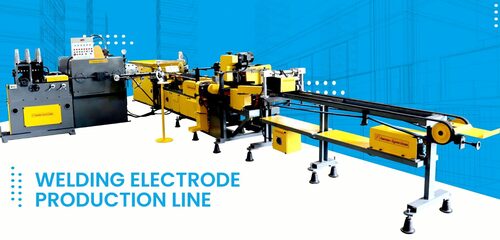
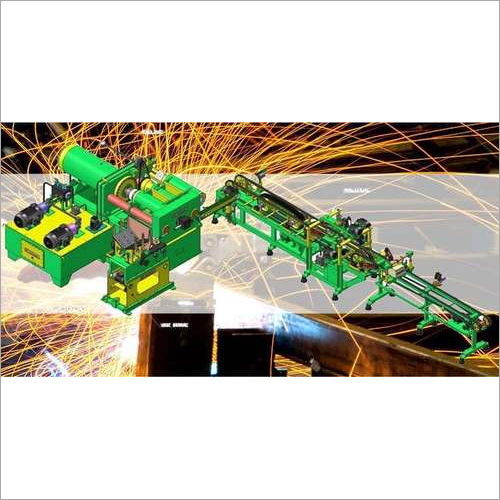
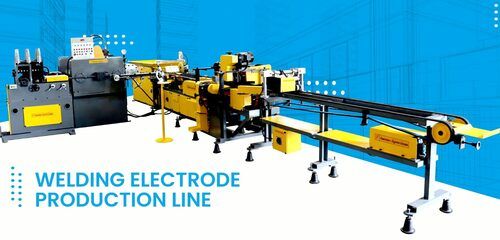
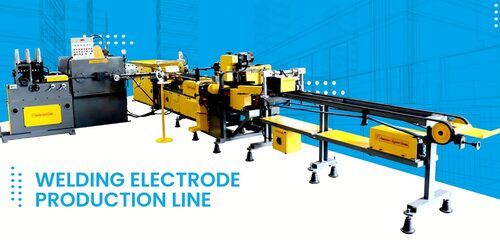
Cutting-edge Welding Electrode ManufacturingThis advanced plant integrates a user-friendly PLC-based control panel and servo-driven wire feeding to ensure seamless electrode production. Able to accommodate standard or customized dimensions, it excels in both semi-automatic and fully automatic setups. The electric or gas heating burner option and water circulation cooling system provide superior temperature control and operational stability, tailored to the evolving needs of welding electrode manufacturers.
Performance-driven Design and OutputDelivering production speeds up to 40 meters per minute, the plant supports high-volume demands with consistent quality and minimal noise levels below 68 dB. Its sturdy construction supports a working temperature up to 45C, with a main motor power of 5 HP and flexible power supply compatibility. Businesses benefit from an efficient quick changeover process and adaptable features, making it ideal for dynamic manufacturing environments.
FAQ's of welding electrode plant in Ohio:
Q: How does the servo-driven wire feeding mechanism improve the electrode production process?
A: The servo-driven wire feeding mechanism allows for precise control of wire movement during production. This ensures consistent electrode diameter and uniform coating thickness, resulting in high-quality electrodes and reduced material wastage.
Q: What are the key benefits of choosing between electric and gas heating burners in the plant?
A: The choice between electric and gas heating provides flexibility based on energy availability and operational needs. Electric heating offers clean, precise temperature control, while gas heating can be more cost-effective for larger-scale, continuous operations.
Q: When is the right time to opt for fully automatic operation instead of semi-automatic?
A: Fully automatic operation is ideal when production scale increases or there is a need for higher efficiency and minimal manual intervention. For moderate output or budget-conscious setups, semi-automatic mode offers effective, hands-on control.
Q: Where can this welding electrode plant be installed and what are the site requirements?
A: This plant can be installed in industrial settings that accommodate its dimensions (16 m x 2.8 m x 2.5 m) and provide a stable three-phase power supply (220V/380V, 50Hz/60Hz). A water supply for cooling and adequate ventilation are also essential.
Q: What is the process flow for manufacturing welding electrodes using this plant?
A: The process involves feeding wire through a servo-driven system, applying the required coating using user-friendly controls, baking electrodes in a high-capacity oven, and cooling them via water circulation. Each stage is monitored and adjusted through the PLC system for consistent quality.
Q: How is quick changeover achieved and why is it important?
A: Quick changeover is facilitated by modular tooling and intuitive control interfaces, allowing operators to switch between different electrode sizes and specifications rapidly. This minimizes downtime and enhances overall productivity.
Q: What advantages does the plant offer for welding electrode manufacturers in terms of production capacity and quality control?
A: With a maximum output of 12,000 electrodes per hour and a PLC-based system for real-time monitoring, manufacturers achieve both high-volume efficiency and reliable quality control, meeting diverse customer requirements effectively.
 Mon-Sat 9.00 AM - 6.00 PM
 Call Us:-07971645354








 Send Inquiry

 Send Inquiry
 Send Inquiry
 Send SMS
 Call Me Free


